



The magnificent Nossa Senhora da Conceição do Ilhéu Fort was built in 1630 by Bartolomeu João to protect the land from cruel pirates.
Its walls were revamped in 1654 to establish an even more unbeatable defence.
Discover what Things To Do In Funchal Madeira! Don’t miss the opportunity to explore the island wonders: read Things To Do Madeira.
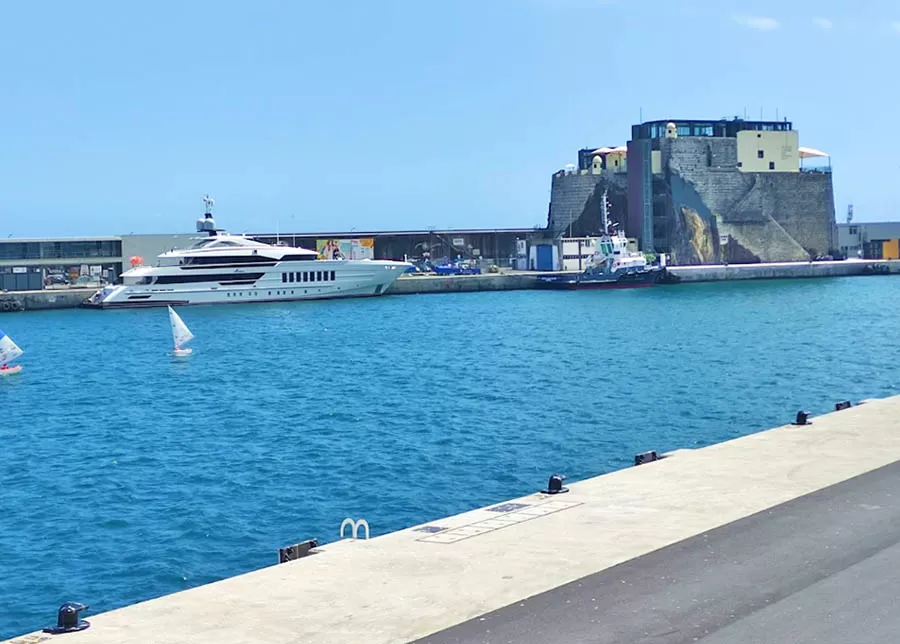
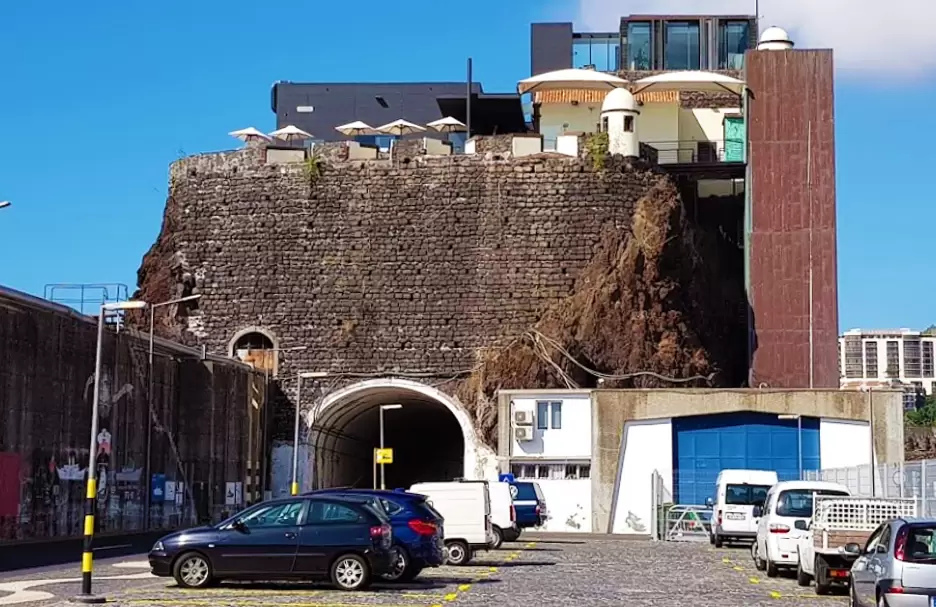
To this day, it stands as a testament to the region’s resistance history.
It is commonly referred to as Forte do Ilhéu. It has an elevator built as part of the state works campaign of Rui Marote in 1845 and a crane that dates from the same year.
Nossa Senhora da Conceição do Ilhéu Fort Location
The memory of João Gonçalves Zarco is indelibly linked to the fort, for it marks his first dwelling in Funchal.
Before his arrival here, he had already resided in Câmara de Lobos (a small village near Funchal).
As the name suggests, this area was once an islet, but with the expansion of the port, it became joined to the mainland.
Zarco is credited as one of the discoverers of the Madeira archipelago and responsible for the inception of Funchal’s settlement.
Presently, the fort houses the Nini Andrade Silva Design Center, with exhibitions and a charming restaurant.


Things to do nearby:
It is impossible to leave out the Design Center Nini Andrade Silva, which includes an exhibition space and a restaurant offering healthy and delicious meals.
Its view is one of the most acclaimed in Funchal, allowing us to enjoy the entire bay. The centre has regular exhibitions of art, design, photography, and other cultural manifestations.
We are right next to the port and the vast cruise ships.
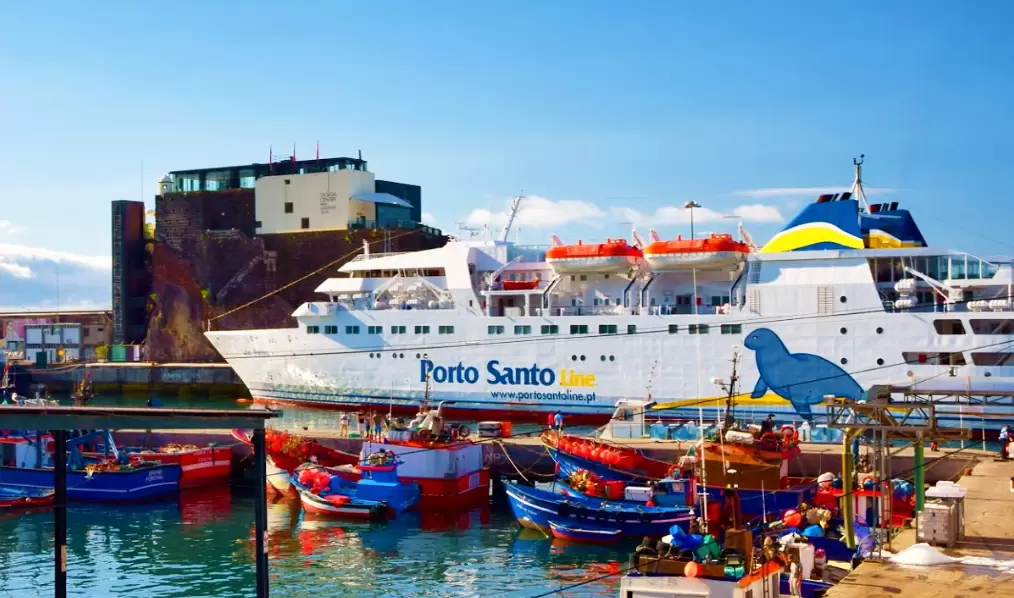
The Lobo Marinho ferry leaves near the fortress, bound for Porto Santo Island (a journey of two hours and fifteen minutes – €60 round trip).
Also near the port, we have the CR7 Museum (and the Pestana CR7 Funchal Hotel). We discover the most memorable moments of Cristiano Ronaldo’s career.
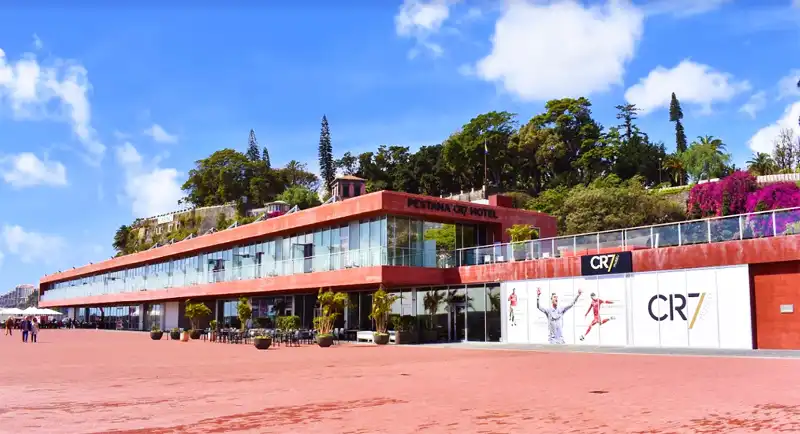
One may also behold trophies, boots, and football jerseys hung upon the walls as symbols of tenacity and victory.
We are five minutes from the city’s beating heart and the Funchal marina.
History

The fortress was an ever-present necessity, since the 16th century, especially after the horrific attack by the French in 1566.
The construction was started in the 17th century by Bartolomeu João, the royal master builder.
The original circular fortress served as a registry of ships entering the port of Funchal. In 1670, the garrison demanded the construction of a chapel.
In the 18th century, it was decided that the fort should be refurbished, providing more weapons.
With the increasing need for port expansion, they unite the islet to the port. It began in 1934 and was completed in 1939.
In 1992, the building was handed over to the Autonomous Region of Madeira, and a recovery project was launched.
